Atmospheric Water Desalination and Reverse Osmosis
Difference Between Desalination and Reverse Osmosis for Human Consumption
Desalination is the broad process of removing dissolved salts and minerals from saline water (such as seawater or brackish water) to produce fresh, potable water gna.it.com. It can be achieved through various methods, including thermal processes (e.g., multi-stage flash distillation) and membrane processes like reverse osmosis. Desalination is often used for large-scale municipal water supply, especially in arid coastal regions glacierfreshfilter.com+1.
Reverse osmosis (RO) is a specific technology used to achieve desalination. It is a pressure-driven membrane filtration process that forces water through a semi-permeable membrane, allowing only water molecules to pass while blocking dissolved salts, heavy metals, and many other contaminants gna.it.com+1. RO is widely used for both industrial-scale desalination and home drinking water purification.
Key Differences
| Feature | Desalination |
Reverse Osmosis |
|---|---|---|
| Definition | Broad process of salt removal from saline water |
Specific membrane-based method for salt removal |
| Scope | Can include RO, thermal, and other methods |
Subset of desalination methods |
| Mechanism | Varies by type (e.g., heating/condensation, membrane pressure) |
Applies high pressure to push water through a membrane |
| Energy Use | Higher for thermal methods; RO is more energy-efficient for brackish water |
Moderate; 2–3 kWh/m³ for brackish water Greenly Water Savers |
| Best For | Large-scale potable water production, drought-prone areas |
Home drinking water, industrial reuse, wastewater recycling |
| Feed Water Suitability | Seawater, brackish water |
Brackish water; seawater requires special RO design (SWRO) Greenly Water Savers |
| Output Quality | Very low TDS (<500 ppm for RO) |
Very low TDS (<100 ppm for RO) Greenly Water Savers |
Practical Implications for Human Consumption
-
Desalination plants supply large populations with safe drinking water, especially where freshwater is scarce. They can handle high salinity (e.g., seawater) but are energy-intensive glacierfreshfilter.com+1.
-
Reverse osmosis systems can be installed at home or in small communities to purify tap water, well water, or recycled water, making it safe for drinking. They are more cost-effective for lower-salinity sources but require careful brine disposal Greenly Water Savers+1.
In short: Desalination is the goal — producing fresh water from saltwater — while reverse osmosis is one of the main tools used to achieve that goal. For human consumption, RO is a common choice for smaller-scale, targeted purification, while desalination is the overarching solution for large-scale water supply.
Grid-Independent Industrial Desalination & Reverse Osmosis
Traditional desalination and industrial Reverse Osmosis (RO) infrastructure face a critical bottleneck: massive, unsustainable electricity consumption. Municipal grids cannot scale to meet both the purification needs of expanding populations and the cooling demands of hyperscale AI datacenters. THERON H2O breaks this limitation.
By pairing heavy-industrial RO filtration matrices with our proprietary permanent magnetic energy systems, we deliver a completely self-sustaining, all-in-one purification infrastructure. We turn high-salinity seawater, brackish water, industrial wastewater, and data center discharge into high-yield, medical-grade H2O—completely off-grid, with zero combustion emissions.
Core OEM Infrastructure Configurations
Our industrial purification systems are engineered for rapid deployment, extreme environmental resilience, and closed-loop efficiency:
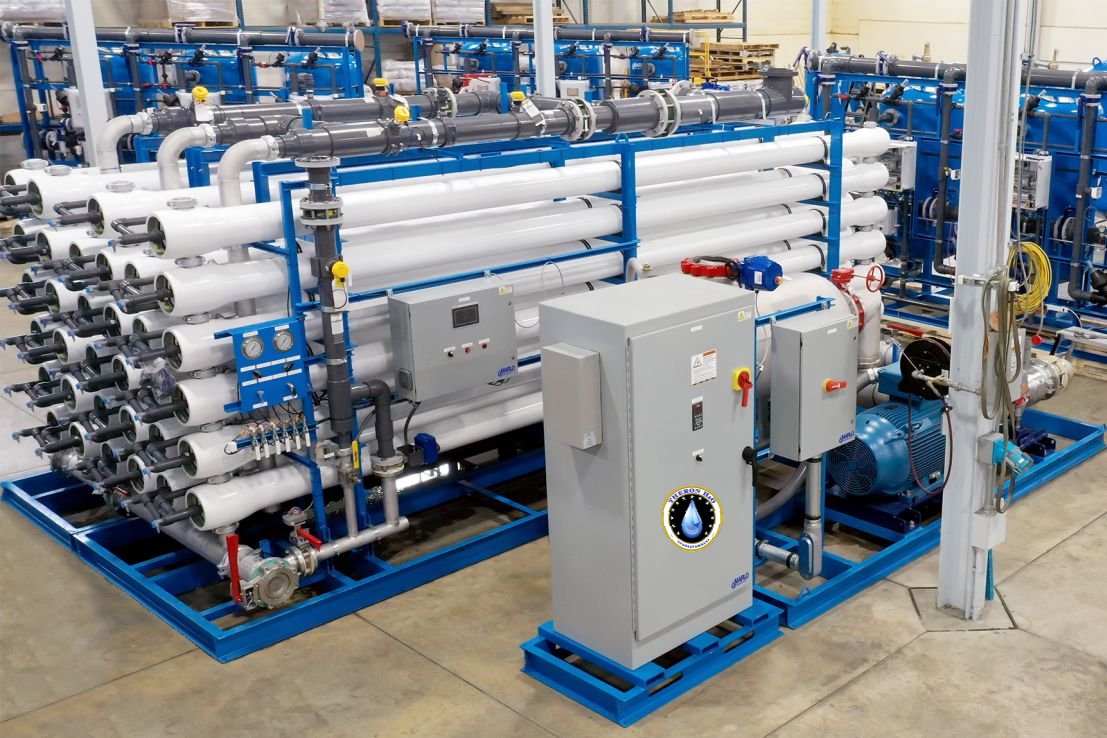
- Containerized Industrial RO Systems: High-capacity, modular purification units built directly into reinforced cargo enclosures. Engineered to process between 16,000 and 32,000+ Gallons Per Day (GPD) of high-salinity input on-site.
- Closed-Loop Datacenter Recycling: Specialized filtration matrices designed to capture, treat, and continuously cycle wastewater from hyperscale compute cooling towers, maintaining an uninterrupted thermal management loop.
- Integrated High-Pressure Infrastructure: Custom-engineered, energy-efficient pumps and advanced biomimetic membranes optimized to run smoothly on the consistent, non-fluctuating raw power output of our magnetic units.
Uninterrupted Operational Reliability
While standard commercial water purification systems remain vulnerable to local utility blackouts and grid failures, the THERON H2O ecosystem offers absolute resource security. Every integrated desalination configuration is backed by our elite 43,830-Hour Warranty, ensuring 5 years of continuous, uninterrupted, off-grid water processing. We don’t just filter water; we engineer absolute resource independence.
Atmospheric Water and Desalination and Reverse Osmosis
Theron H2O product range with Theron Desalination or Theron RO products turn
AI Data Center waste water or dirty sewer water or seawater or brackish water into fresh water, featuring technologies like reverse osmosis (RO) systems, portable watermakers, and industrial-scale desalination plants. Key products include containerized RO units, energy-efficient pumps, membranes, and, in some cases, “solar-powered” systems for converting salt water, wastewater, or brackish water for industrial or potable use. THERON H2O is leading the Desalination industry globally because our combined Disruptive Technologies namely Permanent Magnetic Energy combined with Desalination or Reverse Osmisis RO products are a ALL-IN-ONE solution, and we intend to roll it out worldwide.
Main Categories of Desalination:
- Commercial/Industrial RO Systems: Large-scale, high-capacity systems (e.g., 16,000–32,000 GPD) used in plants, such as those from Pure Aqua and Xylem Water Solutions.
- Marine Watermakers: Compact systems designed to turn seawater into fresh water aboard ships, offered by companies like The Hope Group and AqSep.
- Portable/Emergency Units: Lightweight, often hand-powered or small-scale devices for camping, sailors, or disaster relief, such as QuenchSea or RODI Systems.
- Components and Chemicals: Key components include reverse osmosis membranes, high-pressure pumps, and pre-treatment chemicals.
Innovative Technologies:
- Solar/Sustainable Systems: Systems like Soul Diesel Australia’s use sunlight to power evaporation, producing fresh water and, in some cases, electricity.
- Deep-Sea Technology: OceanWell develops systems that use natural ocean pressure to reduce energy consumption.
- Advanced Materials: New membranes, including graphene and biomimetic materials, are increasing efficiency