The need for water (H2O) in AI data centers are huge.
- Daily: A large data center can use 1 to 5 million gallons of water per day, comparable to a small city’s needs.
- Annually: A medium-sized data center can use around 110 million gallons annually.
- By Query: An AI query might use about 16 ounces (a bottle) of water, but this varies widely by model and platform.
- Cooling Systems: Evaporative cooling towers use large volumes of water, while air-cooled data centers use much less.
- AI Workload: More complex AI tasks (like training large models) increase heat and water demand.
- Location: Centers in hot climates or water-scarce regions have higher consumption or greater impact.
- Indirect Use: Power generation for data centers adds significantly to their total water footprint (indirect consumption).
- Massive Growth: Tech giants like Google and Microsoft have seen their water consumption rise significantly with AI demand, consuming billions of gallons yearly.
- Local Strain: This thirst strains local freshwater resources, impacting communities, especially in arid areas.
- Future Projections: Global AI water demand is projected to reach 1.1 to 1.7 trillion gallons annually by 2027.
- Waterless Cooling: Technologies like direct-to-chip or immersion cooling can drastically reduce water use.
- Efficiency: Better electricity efficiency also lowers indirect water use from power plants.
Who is buying up water rights now (2025)?
- Amazon (AWS), Google, and Microsoft: These three tech giants are expanding their data center operations rapidly to power AI and cloud services, leading to a significant increase in water consumption for cooling. All three have pledged to be “water positive” by 2030, meaning they aim to return more water to communities than they consume.
- Meta and xAI: Meta is also a major consumer of water for its data centers and has made a water-positive commitment. Elon Musk’s xAI is another player in the data center buildout that has been mentioned in the context of high water usage and efforts to limit public data on consumption.
- Private Investment Firms: The acquisition of water rights and land is not limited to tech companies directly. Private equity firms such as BlackRock and Blackstone have been buying local utilities or investing in data center operators, which gives them control over water allocation and infrastructure.
- Investment Groups/Developers: Investment groups and developers often act as intermediaries. For instance, reports indicate that investors trade parcels with local landowners to consolidate water rights quietly, in anticipation of future data center development.
- Deals with Municipalities/Utilities: The most common approach involves striking deals with local or regional water utilities for access to large volumes of water, sometimes including arrangements for treated wastewater or “purple water” use.
- Infrastructure Investment: Companies may invest in local water infrastructure (like Google did with a $10 million water system for The Dalles, Oregon) to increase the overall supply, which then supports their facilities.
- Land Acquisition: The purchase of vast tracts of land is often a precursor to data center development, and these land deals frequently include the associated water rights, a tactic observed across the Western US.
- Non-Disclosure Agreements (NDAs): A significant point of contention is the use of NDAs by tech companies to prevent local governments from publicly sharing specific water usage data, making it difficult to track exactly how much water is being secured and consumed in some regions.
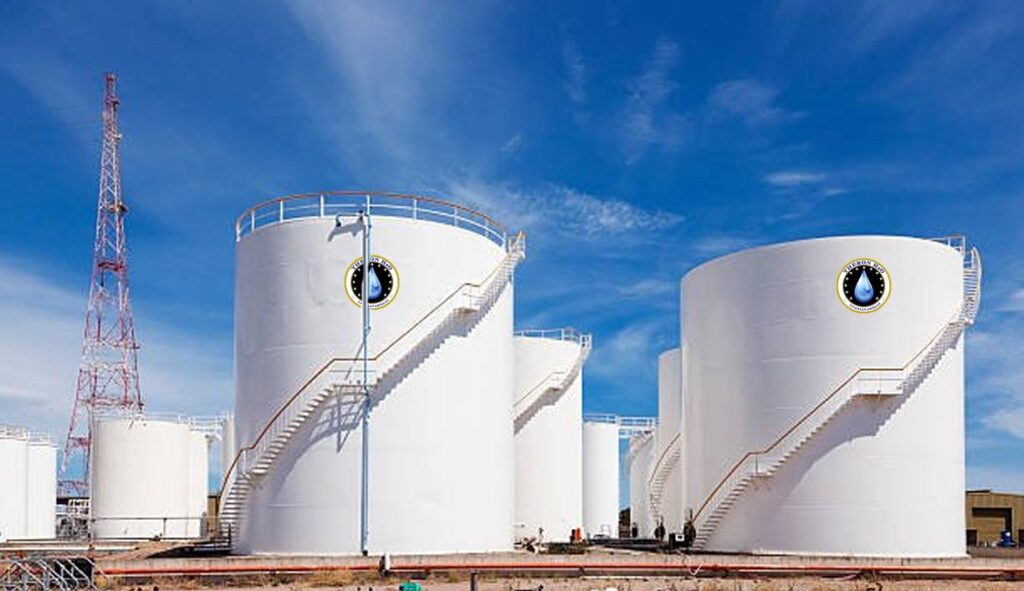
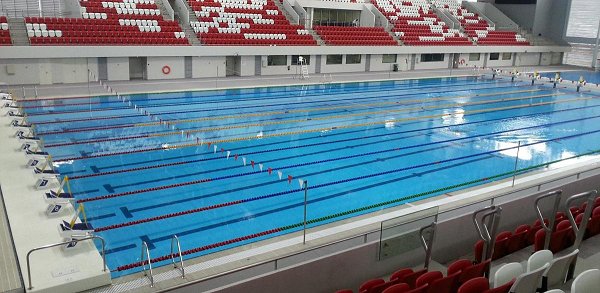
| Metric | Value |
|---|---|
| Length | 50 meters (164 feet) |
| Width | 25 meters (82 feet) |
| Minimum Depth | 2 meters (6.6 feet) |
| Volume (at min. depth) | ~660,000 US gallons (~2.5 million liters) |
A large AI data center needs 100 million liters every day! That's 40 olympic swimming pools daily...
Data Centers and Water Consumption
By Miguel Yañez-Barnuevo
June 25, 2025
Highlights:
|
AI/Data Center Resources |
- Data center developers are increasingly tapping into freshwater resources to quench the thirst of data centers, which is putting nearby communities at risk.
- Large data centers can consume up to 5 million gallons per day, equivalent to the water use of a town populated by 10,000 to 50,000 people.
- With larger and new AI-focused data centers, water consumption is increasing alongside energy usage and carbon emissions.
- Novel technologies like direct-to-chip cooling and immersion cooling can reduce water and energy usage by data centers.
Data centers have a thirst for water, and their rapid expansion threatens freshwater supplies. Only 3% of Earth’s water is freshwater, and only 0.5% of all water is accessible and safe for human consumption. Freshwater is critical for survival. On average, a human being can live without water for only three days. Increasing drought and water shortages are reducing water availability. Meanwhile, data center developers are increasingly tapping into surface and underground aquifers to cool their facilities.
A medium-sized data center can consume up to roughly 110 million gallons of water per year for cooling purposes, equivalent to the annual water usage of approximately 1,000 households. Larger data centers can each “drink” up to 5 million gallons per day, or about 1.8 billion annually, usage equivalent to a town of 10,000 to 50,000 people. Together, the nation’s 5,426 data centers consume billions of gallons of water annually. One report estimated that U.S. data centers consume 449 million gallons of water per day and 163.7 billion gallons annually (as of 2021). A 2016 report found that fewer than one-third of data center operators track water consumption. Water consumption is expected to continue increasing as data centers grow in number, size, and complexity.
According to scientists at the University of California, Riverside, each 100-word AI prompt is estimated to use roughly one bottle of water (or 519 milliliters). This may not sound like much, but billions of AI users worldwide enter prompts into systems like ChatGPT every minute. Large language models require many energy-intensive calculations, necessitating liquid cooling systems.
Water Impacts in Nearby Communities
The water consumption of the 5,426 data centers nationwide is already impacting local communities. Northern Virginia is considered the world capital for data centers, with over 300 operational data centers spread across four counties: Fairfax, Loudoun, Prince William, and Fauquier. Collectively, all data centers in Northern Virginia consumed close to 2 billion gallons of water in 2023, a 63% increase from 2019. Loudoun County, with approximately 200 operational data centers, used around 900 million gallons of water in 2023. This has led Loudoun Water, the county’s water authority, to rely heavily on potable water for data centers rather than reclaimed water.
Making Data Centers More Water-Efficient
Data center developers’ most common choice is to withdraw water from blue sources and employ water-intensive practices, such as air cooling through water evaporation. However, there are other options. To make a more sustainable choice for nearby communities and ecosystems, developers can instead use innovative water management techniques to reduce water consumption, including closed-loop cooling systems, immersion cooling, air cooling, and using non-potable water sources (e.g., recycled wastewater and captured water).
Closed-loop cooling systems enable the reuse of both recycled wastewater and freshwater, allowing water supplies to be used multiple times. A cooling tower can use external air to cool the heated water, allowing it to return to its original temperature. These systems can reduce freshwater use by up to 70%.
Free cooling is a method where outside cold air is drawn into the data center to cool the equipment. Data centers must be located in cooler climates for this strategy to be effective.
Air cooling involves air conditioning vents and tubes that remove heat generated by chips as they process data and AI requests. This method is most effective in areas where electricity is cheaper and water resources are limited.
Immersion cooling in data centers involves bathing servers, chips, and other components in a specialized dielectric (or non-conductive) fluid. Hardware is submerged in specially designed tanks filled with the coolant. The non-conductive liquid absorbs the heat from the chips and transfers it to a heat exchanger, where it is cooled down before flowing back into the tank. Immersion cooling is a novel process that entails higher upfront costs than conventional direct liquid cooling, but provides significant energy savings and space-optimization benefits for data center developers. Since the technology uses synthetic fluids, it requires significantly less water than other approaches.
Powering data centers with renewable energy sources, like solar or wind, requires significantly less water consumption than obtaining energy from fossil fuel power plants. With approximately 56% of the electricity used to power data centers nationwide coming from fossil fuels, deploying more clean energy to power these facilities can significantly reduce water consumption. Coal plants are the most water-intensive facilities, requiring approximately 19,185 gallons of water per megawatt-hour (MWh) of power generation. Natural gas power plants consume approximately 2,800 gallons per MWh. In 2022, 40% of all total U.S. annual water withdrawals, or about 48.5 trillion gallons, were made by coal and gas power plants. Of those 48.5 trillion gallons, 962 billion gallons of water were consumed and were no longer available for direct downstream use. Meanwhile, rooftop solar panels and wind turbines do not need any cooling water, and they are not a steam-based energy technology like coal and natural gas.
If the United States moves toward 100% renewable energy generation and the retirement of fossil fuel plants, the water savings would be enormous, with billions of gallons of water saved, and more freshwater would be available for both human consumption and natural ecosystems.
Author: Miguel Yañez-Barnuevo
Connecting with Miguel’s article above, this is PRECISELY what THERON H2O’s ATMAG GENSETS are all about. 100% perpetual permanent energy combined with atmospheric reverse osmosis clean drinking water!