
The need for atmospheric water generators (AWGs) stems from a lack of access to clean water in many parts of the world, including regions with limited infrastructure, contaminated water sources, or during emergencies and disasters. They offer a sustainable solution by producing potable water from air humidity, providing a reliable and often autonomous water supply for homes, businesses, and relief efforts.
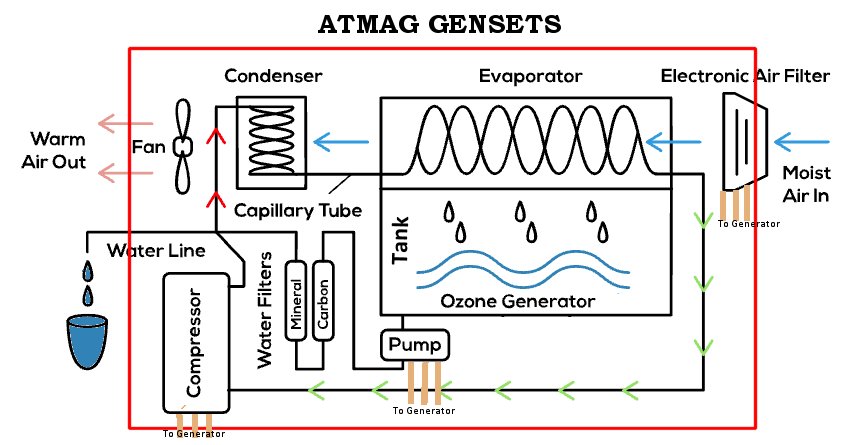
Addressing water scarcity and contamination
- Water-scarce regions: AWGs provide a source of drinking water in areas where freshwater supplies are depleted, contaminated, or otherwise inaccessible.
- Contaminated water: They can be used in places where tap or ground water is polluted and unsafe to drink, offering a high-quality alternative.
- Lack of infrastructure: They are valuable in remote or underserved areas that lack plumbing or the infrastructure to transport water, such as off-grid homes or developing communities.
Emergency and relief situations
- Natural disasters: AWGs can be deployed after natural disasters to provide an immediate source of clean drinking water when traditional water services are disrupted.
- Military and emergency response: They can be used by military forces or emergency relief agencies to provide a consistent supply of water in the field.
Other applications and benefits
- Sustainability: When powered by renewable energy sources like solar, they have low running costs and can provide an eco-friendly alternative to bottled water, reducing plastic waste and transportation needs.
- Autonomy: They offer water autonomy, making users independent of local water grids, which is beneficial for residential use, commercial buildings, and even recreational vehicles.
- Economic viability: In some cases, AWGs can be more cost-effective than building new water treatment facilities or continually purchasing bottled water, especially when compared to the long-term costs of bottled water.