Water from AI data centers isn’t inherently “contaminated” in a toxic industrial sense, but its use and discharge can introduce chemicals (like cooling agents, biocides) and high salt concentrations into local water systems, stressing supplies and affecting quality, especially in water-scarce areas, leading to concerns about nutrient pollution and depleted aquifers, as seen in Oregon and Arizona where some communities report issues with nitrates and water availability after data center water use.
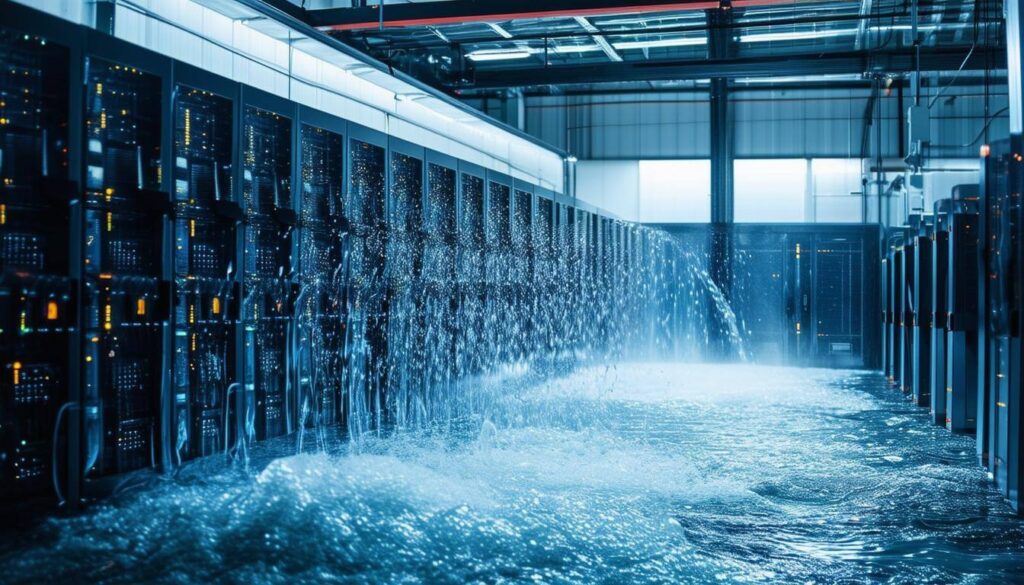
How Water Gets Affected
- Cooling Systems: Data centers use massive amounts of water for cooling, often in closed-loop systems, but periodic “blowdown” (releasing concentrated water) contains chemicals.
- Chemical Additives: To prevent algae and corrosion, water is treated with biocides and anti-scaling agents, making it unsuitable for drinking if discharged untreated.
- Evaporation: Most water is lost to evaporation, leaving behind concentrated salts and minerals in the remaining water, affecting local water quality and ecosystems.
Real-World Examples
- Oregon: Data center discharge sprayed on farmland has been linked to nitrate contamination in local aquifers, exceeding safety limits for drinking water.
- Arizona & Georgia: Communities near data centers report wells running dry or water quality issues, increasing competition with agriculture and raising health concerns.
The AI Factor
- Increased Demand: The booming AI sector significantly increases water demand, with some estimates suggesting a single AI query uses significant fresh water.
- Power Generation: The water used to generate the electricity (often fossil fuel-based) powering data centers adds to overall water stress, say Food & Water Watch and The Atlantic, as cited in result.
In Summary: While data centers aren’t typically flagged for heavy industrial waste like factories, their vast water consumption and the nature of their cooling water discharge pose unique challenges, impacting local water supplies and quality, especially where water is already scarce.
AI Water Pollution
AI data centers pollute water primarily by discharging heated, chemically-treated water from cooling systems and by indirectly consuming vast amounts of freshwater for power generation, stressing local supplies, especially in dry areas, leading to contamination from biocides, salts, and heavy metals, and depleting resources for communities.
Direct Water Pollution (Discharge)
- Chemical Additives: Cooling systems use chemicals (biocides, corrosion inhibitors like phosphates, molybdates) to prevent bacteria, algae, and corrosion.
- Contaminant Discharge: When this water is discharged (or evaporates, leaving concentrated salts), it releases these harmful chemicals, heavy metals (zinc, copper), and high salt levels into municipal systems or local water bodies.
- Thermal Pollution: Warm or hot water returned to rivers, lakes, or aquifers disrupts local ecosystems and marine life.
Indirect Water Pollution & Consumption
- Power Generation: AI data centers use massive electricity, often from power plants (coal, nuclear) that consume huge volumes of water for cooling, effectively “borrowing” water that never returns to the source.
- Resource Depletion: Much of this water is lost to evaporation, depleting rivers and aquifers, especially in water-scarce regions where many AI hubs are built (e.g., Arizona, Texas).
- Indirect Footprint: Even if using recycled water, it’s still removed from the local water cycle, affecting downstream communities.
Why AI Intensifies This
- Intense Cooling Needs: AI’s demanding models generate more heat, requiring more intensive cooling, including liquid cooling systems that use fresh, treated water.
- Location in Dry Areas: Tech companies often build in drier regions for cooler climates, exacerbating water stress and conflicts with local needs.
Key Pollutants & Impacts
- Heavy Metals & Chemicals: Harmful to human health (skin, kidneys) and aquatic life.
- High Dissolved Solids (Salts): Stresses organs and contributes to kidney stones in humans; alters water chemistry.
- Thermal Changes: Disrupts aquatic habitats.